
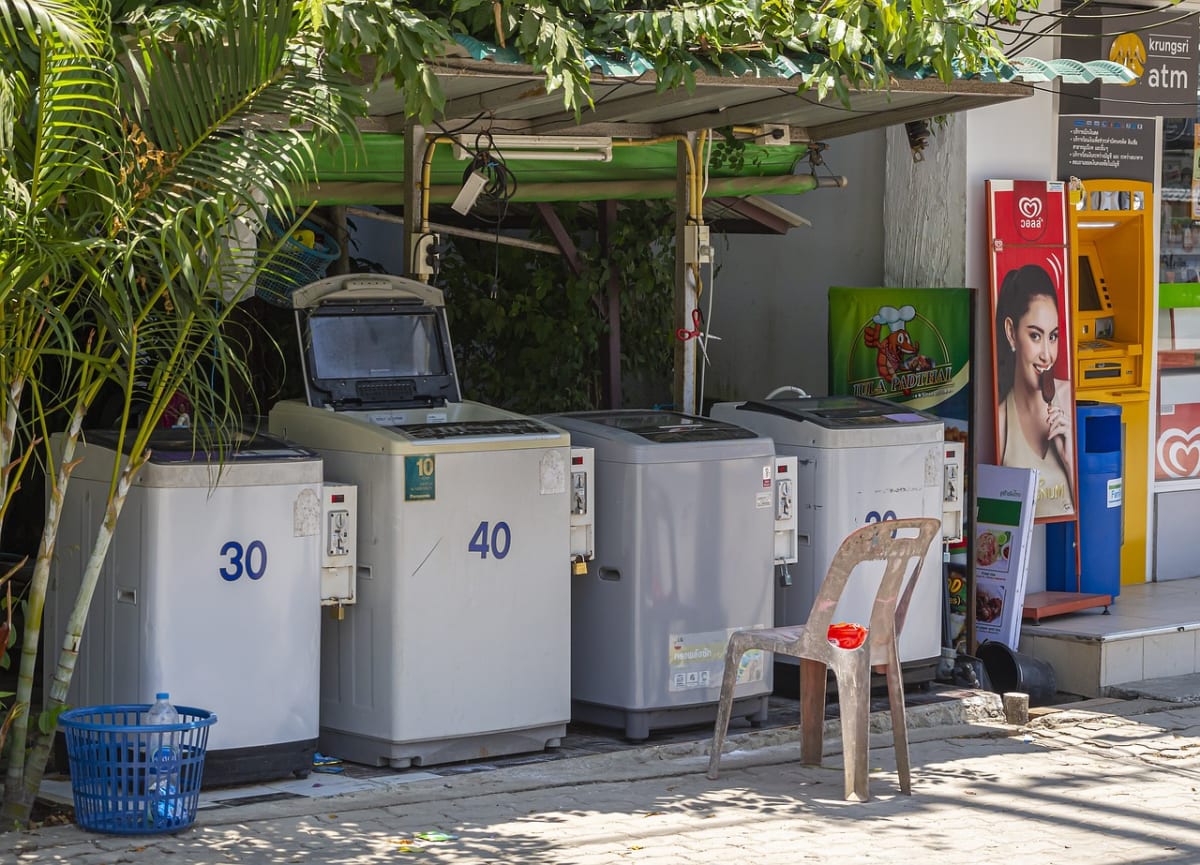
A laundry business looks simple: people have dirty clothes, you have machines, they pay you. The trouble starts in the details. Power cuts stop your machines mid-cycle, water supply runs short, and a customer's ruined shirt can wipe out a week of earnings. This guide walks through how to size the business, what equipment decisions matter, how to price, and where these businesses usually go wrong.
No prices appear here as fact. Costs of machines, diesel, soap and rent change often and differ by city, so get current quotes before you commit any money. The worked example below uses made-up numbers only to show you how to think.
Pick your model before you buy anything
There are three common starting points, and they carry very different risk.
| Model | What you need | Main risk |
|---|---|---|
| Pickup and delivery, outsourced washing | Phone, bags, a motorbike or delivery partner, a partner laundry | Quality depends on someone else; thin margins |
| Wash-and-iron from a small shop | Washing machine(s), dryer or drying space, iron, water, power | Power and water costs; staff handling |
| Self-service or full commercial laundry | Several machines, steady power, bigger space | High setup cost; needs steady footfall |
If you have limited savings, start with the first or second model. Testing demand with a partner laundry teaches you who your customers are before you spend on machines.
Choose a location by customers, not rent
Your best customers are people with money but little time: students in hostels, working professionals in estates, small guesthouses and salons. Walk the area and ask a few of them how they wash now and what annoys them. Common answers are slow turnaround, lost items and clothes returned damp.
Check three things at any site: reliable water (a borehole or steady supply), your ability to run a generator or solar without neighbours complaining, and where wastewater goes. Soapy water draining into a shared compound causes disputes fast.
Equipment: what to ask and what to avoid
Domestic machines are cheaper but wear out under daily commercial loads. Commercial machines last longer but cost more upfront. Ask each seller:
- Is this rated for commercial or domestic use?
- What is its power draw, and can my generator or inverter run it?
- How much water does one cycle use?
- Is there a local technician and are spare parts available?
- What warranty applies, and in writing?
Buy from a seller you can find again. Be careful with "fairly used" machines unless you can see them run a full cycle. Also budget for an iron or steam press, hangers, folding tables, bags, detergent, tagging materials and a weighing scale.
Power is your biggest operating risk
Washing machines are manageable; dryers and pressing irons are the heavy power users. Many small operators use line drying in dry weather and a dryer only for rainy days or urgent orders. Think through your backup plan:
- Grid only: cheapest on paper, but outages stop work and delay orders.
- Generator: reliable if maintained, but fuel and servicing become a daily cost.
- Solar with inverter: higher upfront cost, lower running cost, but sizing matters. An undersized system fails exactly when you need it. Get a written load calculation from an installer.
Whatever you choose, track the power cost per load. Many new owners ignore it and only discover the problem when cash runs short. For more on power and connectivity planning, see our guide on power and internet backup; the same thinking applies.
A hypothetical pricing example
These figures are invented to show the method. Replace every number with local quotes.
Assume you charge ₦1,000 per kilogram for wash and fold (hypothetical). Assume the cost per kilogram is: detergent and softener ₦100, power or fuel ₦150, water ₦30, packaging ₦40, and labour ₦200. That totals ₦520, leaving ₦480 per kilogram before rent, repairs, transport, marketing and your own pay.
Say you wash 40 kg a day on 24 working days a month: 960 kg. Gross margin would be about ₦460,800 (960 × ₦480). Now subtract monthly rent, machine servicing, replacement of damaged items, and your salary. If rent and other fixed costs come to ₦250,000, you are left with around ₦210,000. That looks fine, but test it against a bad month: if volume drops to 20 kg a day, margin falls to roughly ₦230,400, and you are barely covering fixed costs.
The lesson is to know your break-even volume. Divide fixed monthly costs by margin per kilogram: ₦250,000 ÷ ₦480 is about 521 kg a month, or roughly 22 kg a day. If you cannot realistically reach that, change the model or the price. Our guide to pricing for profit covers the method in more detail.
Pricing structures that work
- Per kilogram for everyday wash and fold. Weigh in front of the customer.
- Per item for shirts, suits, duvets, curtains and delicate items.
- Express surcharge for same-day or next-day returns, only if you can actually deliver.
- Monthly plans for students, guesthouses or salons, which give predictable income but need a written agreement on volume and payment dates.
Check what nearby competitors charge, but do not simply undercut them. Cheap pricing attracts heavy loads and complaints, and leaves no money for repairs.
Handling customer clothes without disasters
- Tag each bag at drop-off and write a simple receipt listing items and any visible stains or damage.
- Read care labels. Refuse or warn about items you cannot safely clean.
- Separate whites, colours and delicates every time.
- Check pockets. Forgotten phones, keys and cash cause arguments.
- Set a written damage policy, for example a limit on compensation, and show it at the counter.
Lost or damaged clothing is the main reason customers leave and post bad reviews. A clear tagging and receipt system costs very little compared with one compensation claim.
Registration, permits and compliance in general terms
Rules vary by country, state and local authority, so confirm with the official bodies instead of relying on what friends tell you. In Nigeria, many small operators register a business name with the Corporate Affairs Commission (CAC), which also helps you open a business bank account and look credible to corporate clients. Ask about tax registration with the relevant tax authority and any state or local government levies, signage permits or premises approvals. Environmental or waste rules may apply to wastewater, and fire safety matters if you run dryers and pressing irons. In Ghana, Kenya or South Africa, check the local business registry, municipal licensing and environmental health requirements. If you are unsure, speak to a licensed accountant or the local business registration office.
Why laundry businesses fail
- Underpricing: the price ignores power, repairs and your own wages.
- Buying too much too soon: machines sit idle while loan or savings repayments continue.
- No power plan: missed deadlines drive customers away.
- Poor handling: mixed-up, shrunken or lost clothes damage trust.
- Weak records: owners cannot tell which services make money. Try the phone-based method in our bookkeeping guide.
- Staff problems: untrained workers damage items or take customers elsewhere.
No laundry business is guaranteed to make money. Demand, location, competition and management all matter, so treat early months as a test.
Frequently asked questions
Can I start with one machine?
Yes, and many people should. One machine, a good iron and a clear delivery promise let you learn demand cheaply. Add equipment only when you are turning away work.
Should I borrow to start?
Be careful. Repayments are fixed, but laundry income is uneven in the early months. If you borrow, use realistic volume estimates, not best-case ones, and avoid loan apps with very short terms.
How do I get my first customers?
Offer a trial to hostels, small offices and neighbours, then ask satisfied customers to refer others. See getting your first 20 customers.
Next step: collect written quotes for one machine, your power setup and monthly rent, then plug them into the break-even formula above before you spend anything.
This article is for general information only and is not financial, legal, or tax advice. Prices, rates and rules change quickly, so check current details before making money decisions.