
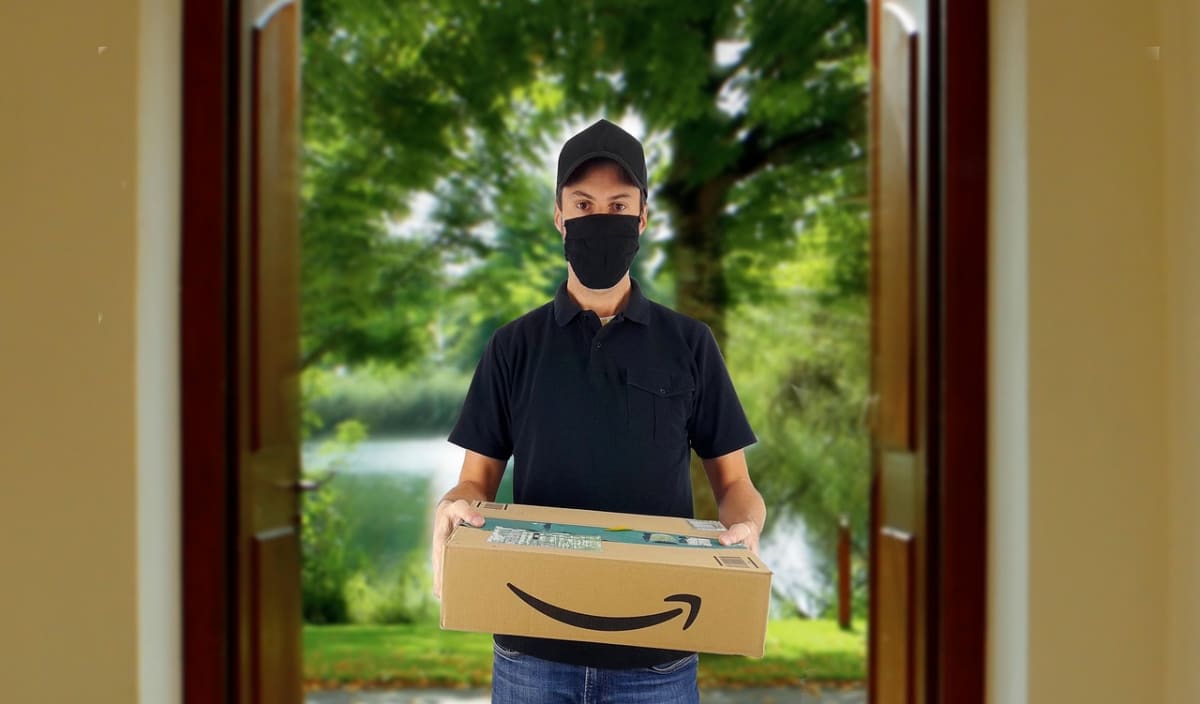
A message lands on your phone: "Your parcel is held at the airport. Pay ₦38,500 clearance fee today or it will be returned." You do expect something, maybe a gift from a relative abroad or an online order. So you pay. An hour later there is a second fee, then a third. That pattern is the scam, and this guide shows you how to break it before any money leaves your account.
The amounts in this post are hypothetical, used only to show how the maths works. For real rules, fees and procedures, always check the official channels named below.
How the parcel and customs fee scam works
The scammer's goal is simple: make you pay a "small" fee for something that doesn't exist, or that you never ordered. They don't need to hack anything. They only need you to be worried about losing a parcel.
There are three common versions:
- The surprise delivery text. An SMS or WhatsApp message says a courier couldn't deliver, with a link to "reschedule" or "pay a redelivery fee". The link opens a copy of a courier page that collects your card details.
- The gift from abroad. Someone you met online (often on social media or a dating app) says they've sent a package of phones, money or jewellery. Then a "customs officer" or "courier agent" calls to demand fees before release. This overlaps with romance fraud; our post on romance scam warning signs explains the pattern.
- The fake online seller or buyer. You "win" an item, or a buyer abroad says they'll ship your goods, but first you must pay duty, insurance or an "anti-terrorism certificate" to a personal account.
The same script works in Ghana, Kenya and South Africa too, only the names of the agencies change. Scammers copy whichever courier or customs authority people in your country know best.
Red flags that should stop you immediately
- You didn't order anything, or you can't name the sender. A real parcel has a real sender you can identify.
- The fee goes to a personal account. Legitimate duties and charges aren't paid into a stranger's savings account or a mobile wallet number. If the account name is a person, stop.
- Payment by transfer, gift card, crypto or airtime. These are favoured because they're hard to reverse.
- Pressure and a deadline. "Pay in two hours or the parcel will be destroyed" is designed to stop you thinking.
- Fees keep appearing. First clearance, then insurance, then "certificate", then "storage". Each payment makes you more likely to pay again because you don't want to lose what you've already spent.
- The contact is a personal WhatsApp or Gmail/Yahoo address. Real couriers and agencies use their own domains and numbers.
- The link looks nearly right. Extra words, odd endings, or a shortened link in place of the courier's real address.
- A "customs officer" who only talks on WhatsApp. Officers don't negotiate fees by chat or ask you to keep it secret.
- The parcel supposedly contains cash or valuables. A package of foreign currency being "held" is a classic bait story. Real money doesn't travel that way.
The 6-step check before you pay anything
Step 1: Pause and don't click
Don't open the link, reply, or call back the number in the message. Take a screenshot first so you have evidence.
Step 2: Match it to something you actually expect
Open your email, order history or chats. Is there an order confirmation? A tracking number you received at purchase time? If you can't match it, treat the message as fake.
Step 3: Track the parcel yourself
Go to the courier's official website by typing the address into your browser or using its official app, and enter the tracking number from your own order. Don't use the tracking page inside the message. If the number isn't recognised, that tells you a lot.
Step 4: Ask what the charge is, in writing
A genuine charge has a breakdown: what it is for, the amount, and a receipt or reference you can verify. If someone can't give you an official invoice tied to a tracking number, don't pay.
Step 5: Call the official number, not theirs
Find the courier's or agency's contact details from its own website. For Nigeria, the Nigeria Customs Service website is the place to look for official contact channels and notices. Ask whether your tracking number has any fee attached.
Step 6: If a real fee exists, pay through the official route
Real duties are normally paid through the courier's or authority's own payment system, in the name of that organisation, and you get a receipt. If you are told to send money to an individual "to avoid delay", that is your answer.
A worked example (hypothetical)
Ada in Port Harcourt gets a WhatsApp message from "Mark", a man she has chatted with for three weeks. He says he's sent a laptop and ₦0 worth of perfume as a surprise. A "courier officer" then messages her: the parcel needs a ₦45,000 "clearance" fee.
Ada pays. The next message asks for ₦120,000 for "anti-money laundering clearance" because the box supposedly has cash in it. If she pays that, a third request will follow, for insurance, perhaps ₦80,000. In total she'd have lost ₦245,000 for a parcel that never existed.
What would have worked: Ada asks for the tracking number and checks it on the courier's own website. It returns nothing. She also notices the "officer" gave a personal account number. Two minutes of checking would have kept ₦45,000 in her pocket, and ended the story. Notice too that the "gift" never came from a verified sender; it came from someone she had never met in person.
How real customs charges differ from scam fees
| Check | Genuine | Scam |
|---|---|---|
| Who contacts you | Courier or agency through details tied to your order | Unknown number, personal WhatsApp, free email address |
| Link | Official domain you can type yourself | Odd spelling, shortened link, copied page |
| Who gets paid | The company or authority, with a receipt | A person's account or wallet |
| Breakdown | Itemised and linked to your tracking number | Vague "clearance" or "certificate" fee |
| Timing | Reasonable time to verify | "Pay now or lose it" |
| Repeat charges | Rare and documented | New fee after every payment |
Fees on real imports do exist, and they are legitimate when you import goods. So don't assume every charge is fake. The test is who is asking, how you can verify it independently, and where the money goes.
Common mistakes that cost people money
- Paying a "small" fee to see if it's real. Small payments are how the scammer finds out you will pay. Verify first.
- Entering card details on a "redelivery" page. That hands over card number, expiry and CVV. If you did, call your bank at once and block the card.
- Sharing OTPs. A delivery fee never needs a one-time code. Our guide on fake BVN update calls and phishing SMS covers what to do about phishing links in general.
- Trusting a clean-looking website. Anyone can copy a logo. Look at the web address, and read our post on confirming the official site for the habit that works every time.
- Keeping quiet from embarrassment. Scammers count on shame. Telling your bank quickly improves your chances.
- Sending ID photos. Some fake agents ask for a selfie with your ID "to release the parcel". That can be used to open accounts in your name.
If you already paid
- Contact your bank or fintech immediately by the official number or in-app chat. Give the account name, number, amount, time and reference. Ask them to flag the receiving account.
- Block your card if you typed card details into any page, and change passwords and PINs you may have reused.
- Keep evidence: screenshots, call logs, receipts, account details. Don't delete the chat.
- Stop contact. Do not send more money to "recover" the first payment, and be wary of anyone who then offers to get your money back for a fee.
- Report it to the police or your country's cybercrime unit. In Nigeria, check the official channels for the Nigeria Police Force and EFCC. In Ghana and Kenya, use the national police cybercrime channels and your mobile network's fraud line.
Speed matters because money can be moved on within minutes. Even if recovery isn't guaranteed, a quick report gives the bank something to act on.
Protecting people around you
Older relatives and people who rarely shop online are targeted most. Tell them one rule: nobody who legitimately delivers a parcel needs money sent to a person's account over chat. If a relative abroad really says they've shipped something, ask for the courier name and tracking number, and check it yourself. If you shop online often, use pay-on-delivery for unfamiliar sellers, and keep your tracking numbers in one place.
Frequently asked questions
Can a courier really ask me for money before delivery?
Sometimes, yes, for genuine import duties or taxes. But it should be tied to your tracking number, itemised, and paid through the company's own system. Confirm by calling the number on the courier's official website.
The message used my real name and address. Does that make it real?
No. Personal details leak from data breaches, delivery forms and public posts. A correct name proves nothing about who is messaging you.
Is it safe to call the number in the message to verify?
No. That number is controlled by the sender. Look up the official number yourself.
What if the sender is a real friend or relative?
Call them on a number you already know. Their account may be hacked, and the "courier" may be a separate fraud. Ask for the tracking number and verify it directly.
Your next step
Take two minutes today to save the official customer-care numbers of the courier you use most and your bank's fraud line in your phone. When the next "your parcel is held" message arrives, you'll know exactly where to check instead of paying.
This article is for general information only and is not financial, legal, or tax advice. Prices, rates and rules change quickly, so check current details before making money decisions.