
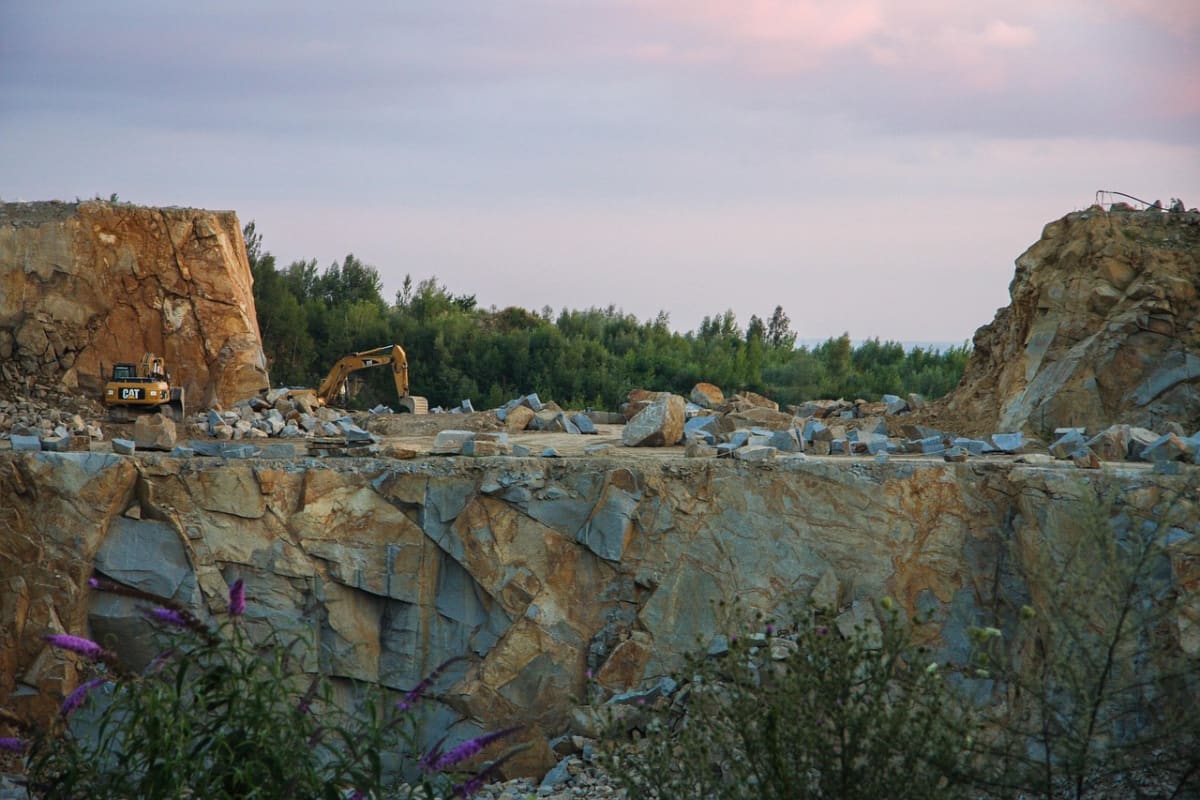
If someone tells you a quarry is "just buying a hill and selling stones", walk away from that conversation. A quarry is a mining operation. It needs land rights, a mining title, heavy equipment, safety systems and a steady flow of buyers. Many people who want "a quarry business" are better off starting one step downstream. This guide explains both routes so you can choose with open eyes.
What a quarry business actually is
A quarry extracts rock such as granite, or materials such as sand and laterite, and usually crushes and grades it into sizes builders buy: chippings, gravel, and so on. Customers are construction firms, road contractors, block makers and individual builders. Demand follows construction activity, so it rises and falls with the building season, government project payments and the cost of cement and fuel.
Three things make it different from a shop or a farm:
- It is regulated mining. You can't simply start digging on land you own or rent.
- It is capital heavy. Machines, trucks and diesel are the main costs, and most of the money is spent before you sell much.
- It affects neighbours. Blasting, dust, noise and heavy trucks create disputes with host communities, and those disputes can shut you down.
Three ways to enter the business
You don't have to own the pit. Compare the options honestly.
| Route | What you do | Capital needed | Main risk |
|---|---|---|---|
| Aggregate trader | Buy from a licensed quarry, resell to builders | Low to moderate | Thin margins, unpaid customers |
| Haulage / delivery | Own or lease tipper trucks, deliver for quarries and builders | Moderate to high | Breakdowns, fuel, bad roads, driver theft |
| Quarry operator | Hold a title, extract, crush, sell | High | Licensing delays, accidents, community conflict, equipment failure |
For most first-timers, trading is the sensible start. You learn who buys, how they pay, and what grades sell, without carrying a crusher on your balance sheet. Operating a quarry fits someone with serious capital, mining or civil engineering experience, or a partner who has both.
Permits and registration in general terms
Rules differ by mineral, size of operation and state, and they change. Treat the list below as a map of what to ask about, not a legal checklist.
- Register the business. The Corporate Affairs Commission is Nigeria's corporate registry and handles company and business name registration. Its own site says registration gives legal recognition, lets you open a corporate bank account and sign official contracts. Most serious quarry buyers and licensing bodies expect a registered entity, and operators usually choose a limited company. Our guide on business name versus limited company helps you decide. The CAC homepage is cac.gov.ng.
- Mining rights. Quarrying generally needs a title or licence from the federal authority responsible for solid minerals. Ask that ministry and its mining cadastre office which type of licence fits your site and size, and whether the area is already taken by someone else.
- Land and community. Even with a title, you need surface rights and an agreement with the landowners and host community. Get everything in writing and keep copies.
- Environmental approvals. Expect federal and state environmental requirements, which may include an impact assessment.
- Explosives and safety. If blasting is involved, it is tightly controlled. Use only licensed blasters and approved suppliers. Never improvise.
- Tax and local levies. Register for tax, and ask the state and local government what levies apply to extraction and haulage.
Be careful with "agents" who promise a licence in a few days for a lump sum. Confirm any licence directly with the issuing office before you pay for land, equipment or anyone's "processing". A fake or already-allocated title leaves you with nothing.
A hypothetical example: starting as an aggregate trader
This is an illustration only. All numbers are assumptions, not market prices. Get current quotes from at least three licensed quarries and three truck owners before you plan anything.
Assume you buy granite chippings from a licensed quarry at ₦200,000 per truckload and pay ₦40,000 for delivery to a building site. Assume you sell the load at ₦265,000 delivered.
- Cost per load: ₦200,000 + ₦40,000 = ₦240,000
- Selling price: ₦265,000
- Gross margin: ₦25,000 per load, about 9.4%
Now take off your own costs: phone and data, a small office or storage arrangement, a part-time helper, and losses. Suppose these add up to ₦150,000 a month. Then you'd need to sell six loads just to break even (₦150,000 ÷ ₦25,000), before paying yourself anything.
Next, apply the real danger. A contractor takes two loads on credit and pays after 60 days. That's ₦480,000 of your cash sitting with someone else. If you started with ₦1,000,000 working capital, nearly half is frozen. Two such customers and you can't buy new loads.
The lesson: in aggregates, volume and fast payment decide survival. A 9% margin disappears with one bad debt or one price rise between the day you quote and the day you buy.
What a quarry operator must budget for
If you go for the operator route, list these cost areas and get written quotes for each. Don't use figures from social media or a friend's guess.
- Licence application, survey, environmental studies and professional fees
- Land access, community agreements and ongoing community obligations
- Excavator, loader, crusher and screens, new or used, plus spare parts
- Diesel, since both machines and trucks run on it, and power for crushing
- Trucks or a haulage arrangement
- Safety gear, first aid, site security and insurance
- Working capital to cover months with few sales, especially in the rainy season when sites slow down and roads worsen
Used equipment can look cheap and become expensive. Before you buy, have an independent mechanic inspect it and ask for the service history. A crusher that's down for three weeks waiting for a part earns nothing while your wages and loan repayments continue.
Why quarry businesses fail
- Starting without the right title. Operators get shut down or fined, and equipment sits idle.
- Underestimating working capital. People spend everything on machines and have no cash for diesel and wages.
- Credit sales. Big buyers often pay late. Without a payment policy, you finance their projects.
- Community conflict. Dust, damaged roads and unmet promises lead to blockades. Budget time and money for the relationship.
- Poor maintenance. Breakdowns are a normal cost of heavy equipment, not a surprise.
- Accidents. Rock falls, vehicle accidents and blasting incidents can injure workers and end the business. Safety is a cost of doing business, not an extra.
- Weak records. If you can't say which loads were sold, to whom and whether they were paid, you can't see problems early. Our post on writing a one-page business plan is a good start, and the signs in our piece on why small businesses fail apply strongly here.
A sensible step-by-step plan
- Visit three or more working quarries and ask to speak with the manager about customers, seasons and problems. Be a polite buyer, not a competitor.
- Decide your route from the table above, based on the cash you can afford to lose.
- Register the business with CAC and open a proper account. See opening a business bank account for documents and delays.
- Get written quotes for product, delivery and any equipment, and build your own hypothetical margin sheet like the one above using real numbers.
- Line up two or three buyers before you buy stock. A signed or written order beats a promise.
- Start with a small number of loads, take part payment upfront on credit-risk customers, and record every sale.
- Take advice from a lawyer and, if you plan to operate, a qualified mining or civil engineer before committing to land or titles.
Frequently asked questions
Can I quarry on land I own?
Owning land does not automatically give you the right to extract minerals from it. Ask the federal solid minerals authorities what applies to your site before you start any digging or sale of material.
Is a quarry guaranteed to be profitable?
No. Results depend on location, access to buyers, equipment reliability, fuel costs and how well you collect payment. Many people lose money, especially in the first year.
Do I need a limited company?
Traders sometimes start with a registered business name. Operators and anyone bidding for larger contracts usually need a limited company. Check requirements with the licensing authority and a lawyer.
How much money do I need?
It varies too widely to give a number. Trading can start small, while operating needs large capital. Get current local quotes for each item and keep a cash reserve for slow months.
Your next step
This week, visit one licensed quarry as a buyer and ask for a written price for one truckload, delivered to a site you name. Then compare it with two other quotes. That one exercise will show you whether the margin in your area is wide enough to build a trading business on.
Sources
Details checked against the official sources above on 14 November 2026. Things change, so confirm on the official site before you act.
This article is for general information only and is not financial, legal, or tax advice. Prices, rates and rules change quickly, so check current details before making money decisions.